

Karori Small Chapel
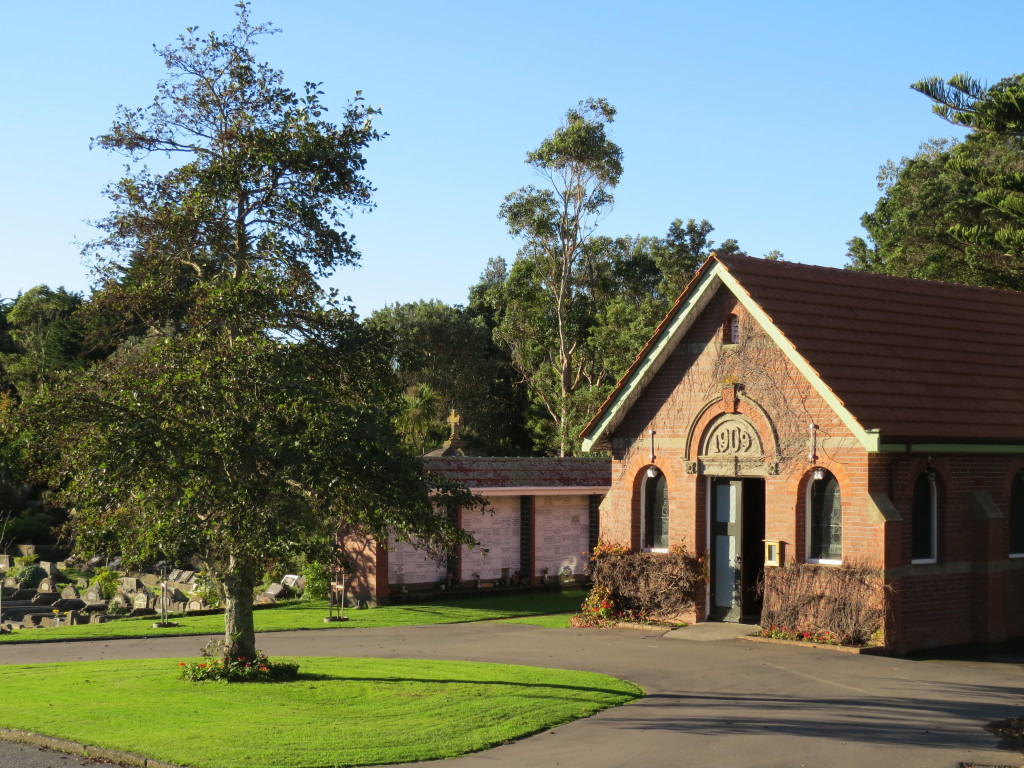
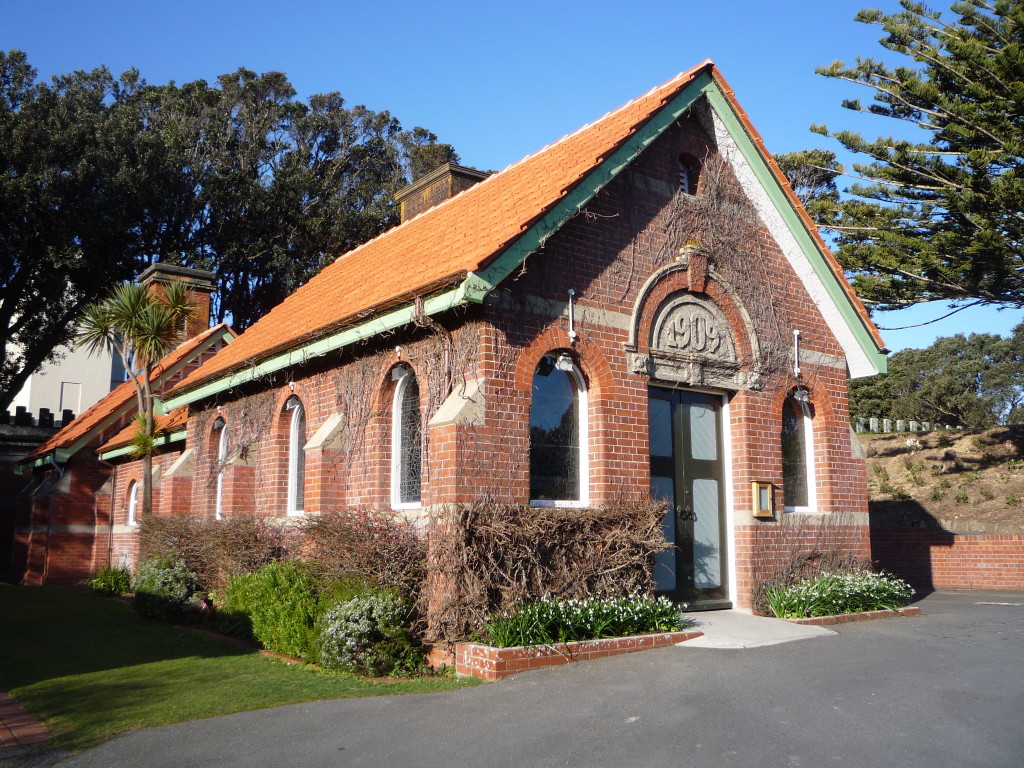
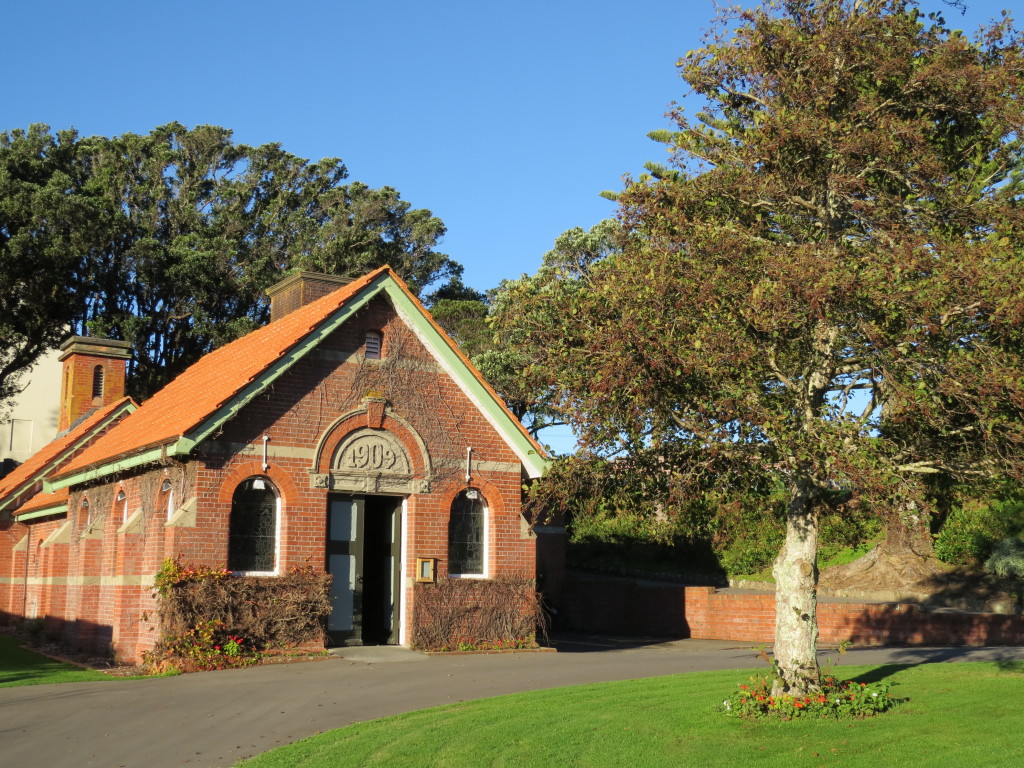
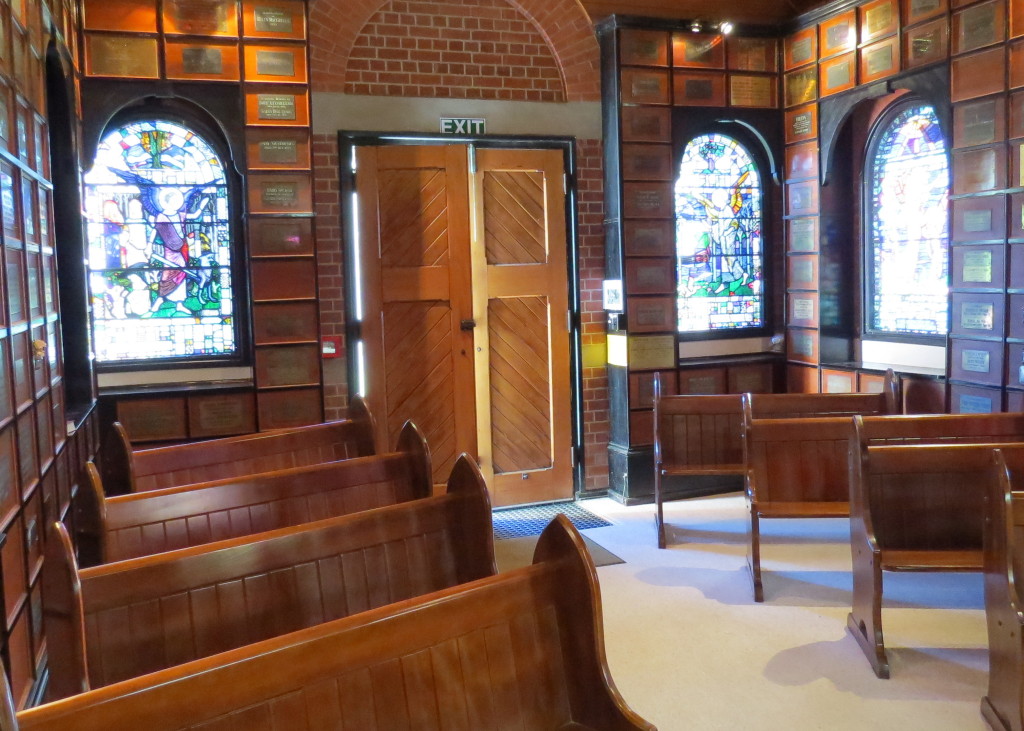
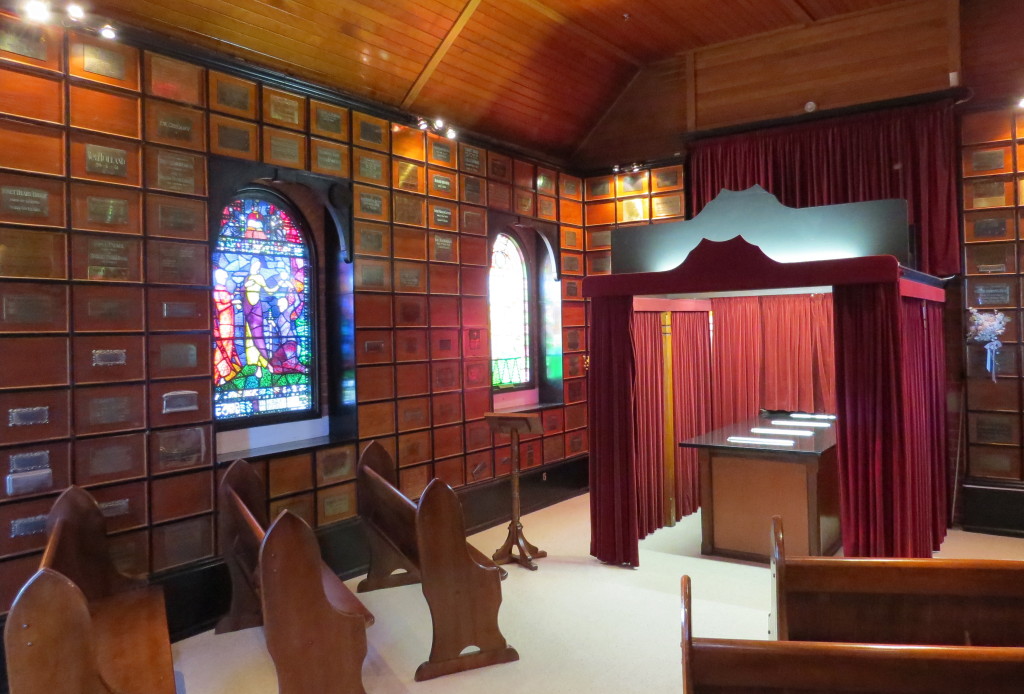
The Karori Small Chapel is our favourite ‘fit for purpose’ space in Wellington. Situated in a private setting within the grounds of Karori Cemetery, the chapel, which seats 24 with some standing room, is the perfect venue for an intimate, private funeral gathering for either cremations or burials.
Often, we’ll suggest families attend a committal service in the Small Chapel the day after a larger funeral elsewhere. They appreciate the opportunity to be more informal and relaxed, to speak freely amongst their closest friends and whanau.
It has a good sound system able to play CD’s or from an iPod. It has excellent access and parking is easy.
Directions
Drive through the main gates of Karori Cemetery off Old Karori Road, past the Memorial Rose Garden on your left and then the Service Men’s section to the chapel on your right.
You can access the Main Chapel up the steps and path to the right of the building.
A first for New Zealand
The Karori Crematorium and Chapel was built in 1909, in the Edwardian-Romanesque style and is the earliest crematorium facility in New Zealand.
Proposals for cremation in Wellington date back to 1888 when William Ferguson (engineer and secretary of the Wellington Harbour Board) suggested that an additional furnace be added to the planned ‘City Destructor’, the councils rubbish disposal facility. While there was some support for this idea in the newspapers, it wasn’t actioned.
When a new cemetery was planned to open in Karori in 1891, an acre was set aside as a crematorium site.
A preliminary plan was drawn up by John Sidney Swan in February of 1907 showing a Gothic-style timber building with the necessary chimney concealed in what appeared to be a bell tower.
The builder’s estimate, excluding the furnace was about £500 – that’s about $104K in today’s money.
William Morton, a City Engineer, was unhappy with the proposal for a timber building to be surrounding a high temperature furnace. Wisely, he drafted an alternative brick design. The building was constructed by James Priddey in 1909 once the furnace had arrived from England.
The first cremation was John Jack on the 2nd of November 1909.
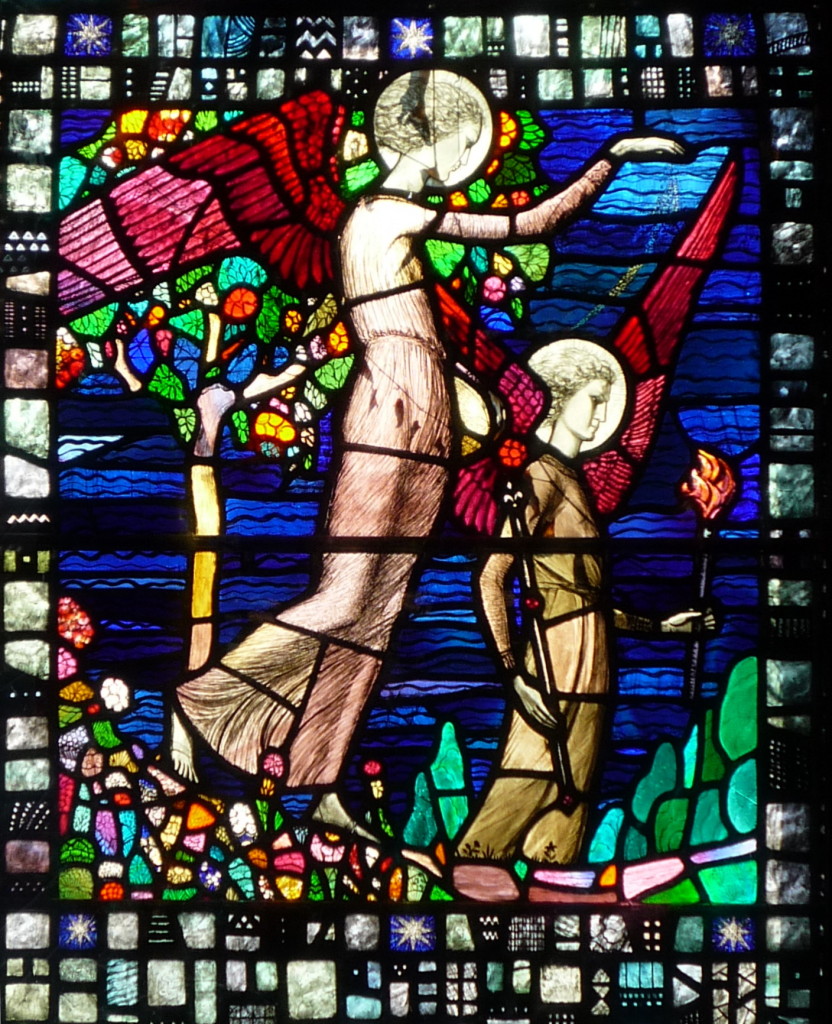
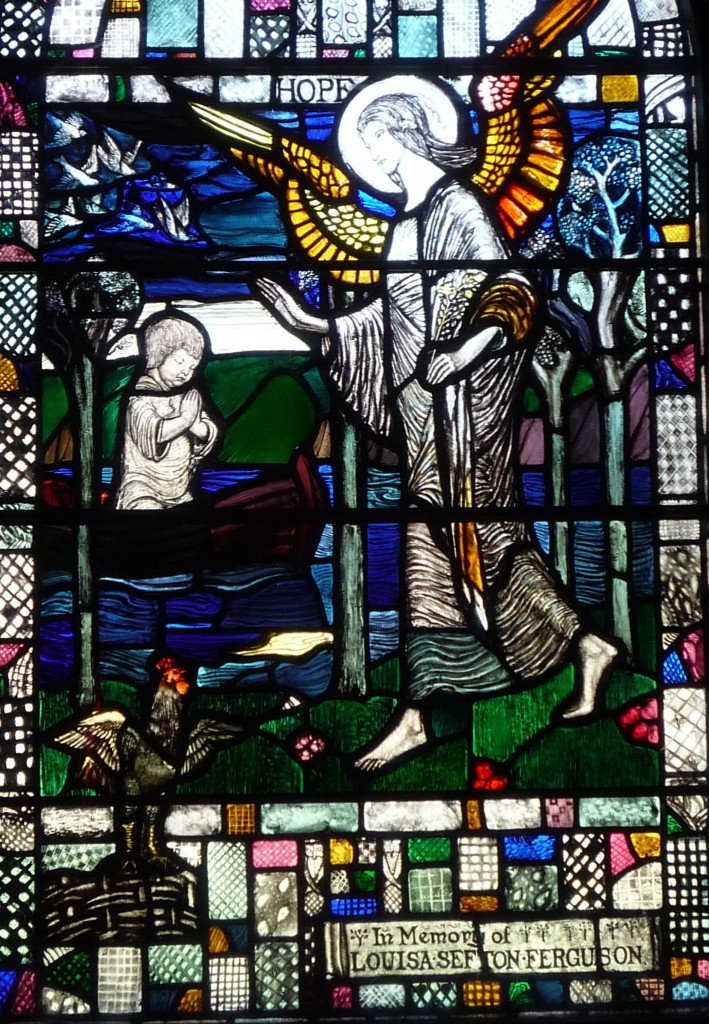
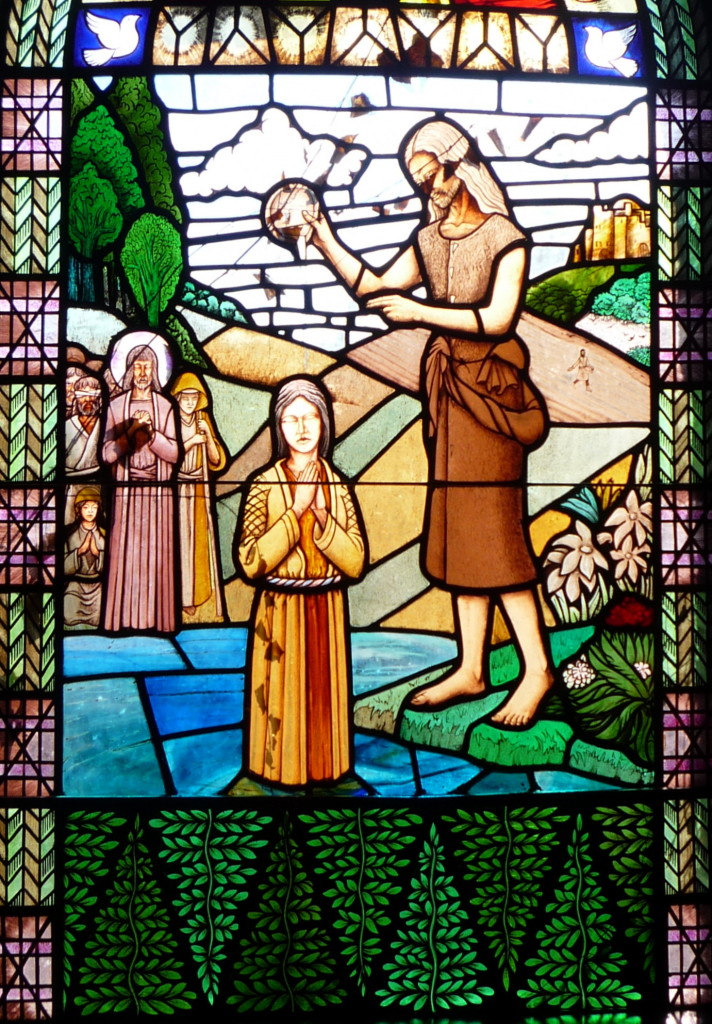
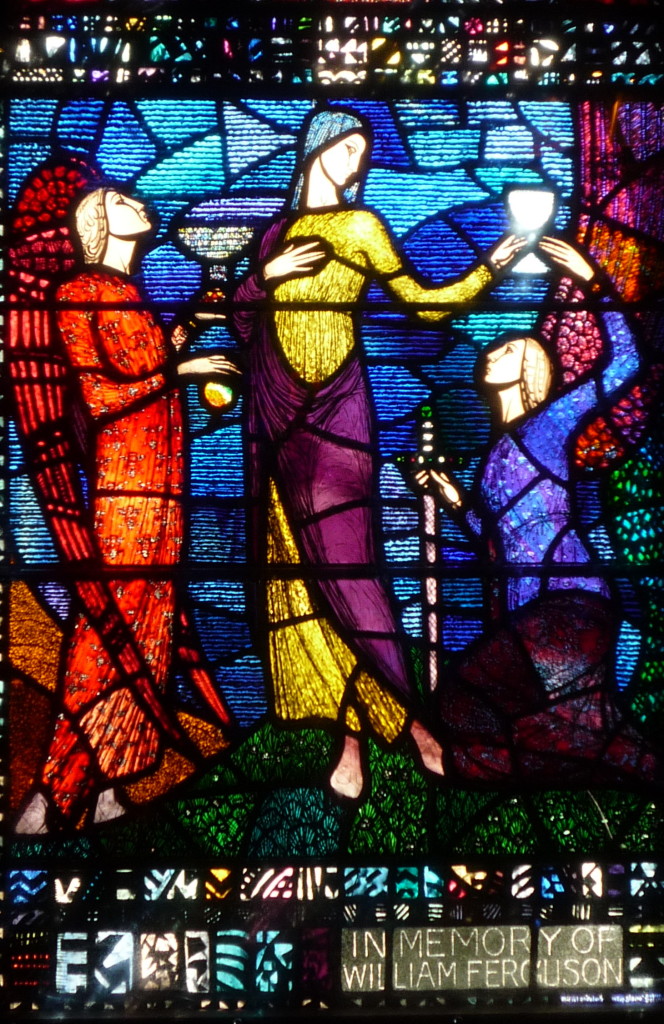
The stunning stained glass windows were a later addition, commissioned between 1914 – 1939 from an Irish Glass Atelier by William Ferguson, the crematorium’s initial champion.
The building has been recently earthquake strengthened and a new, efficient, computerised cremator installed.