

In theory, being buried on your land is lawfully possible – in practice, logistically difficult. A legal requirement is that you need to die 32kms away from a public cemetery, but as New Zealand is a long skinny landmass, rich in public cemeteries, chances are statistically unlikely.
New Zealand’s Burial & Cremation Act dates back to 1964 (but is currently under review). It allows for a body to be buried on land in; a public cemetery, a denominational burial ground, a recognised private burial ground that may have been established before the Act (with permission from the District Court) or an urupa.
Approval for someone to be buried at a place of particular importance would only be granted ‘under exceptional circumstances’ for a ‘public notable whose deeds were of national significance’. Families who have in the past applied, citing a strong association with their land, have been declined.
Public submissions in response to the review of the Act have requested changes to the law in New Zealand. In the UK and some Australian states permission for burial on private land is more often granted. If you have visited Rarotonga, burial plots in the front garden are a common sight.
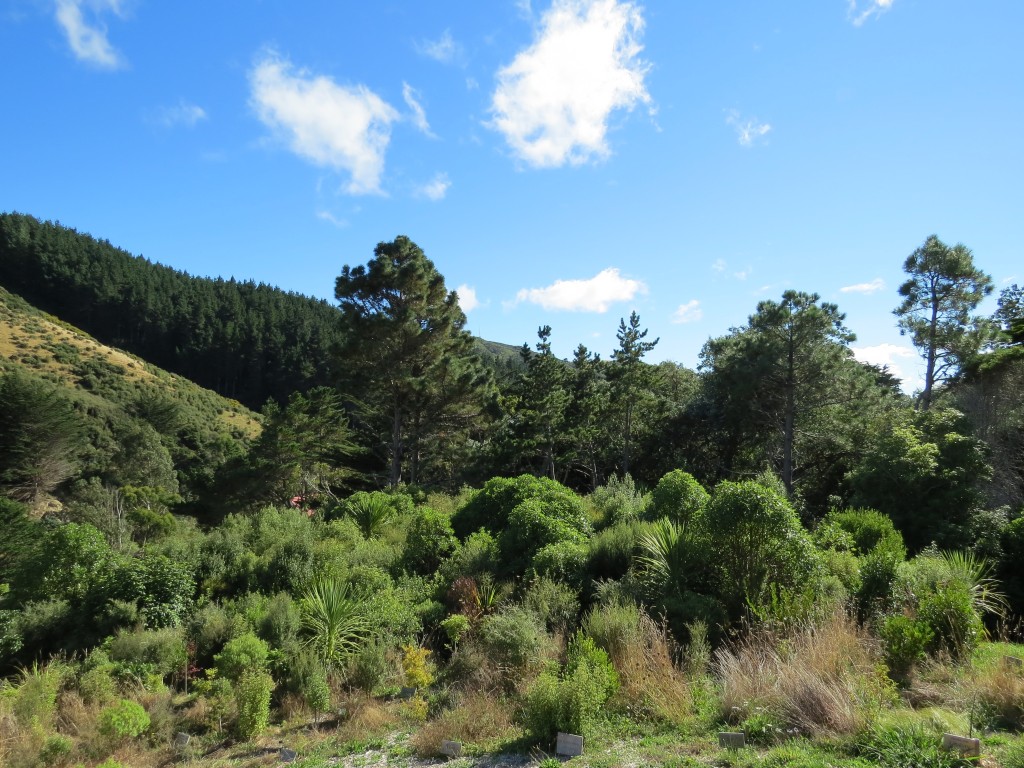
However, until the Act is potentially revised, there is an interim solution for those who enjoy the garden-like aesthetic. In Wellington, interred amongst thriving native bush are more than 350, mainly Wellington residents who have opted for a Natural Burial. The scheme was established in 2008 by the not-for-profit ‘Natural Burials’ with the plots administered by the Wellington City Council.
An alternative to an eternity at the bottom of the garden over planted with pansies – here you could push up Oleria arboresences – native tree daisies, instead.